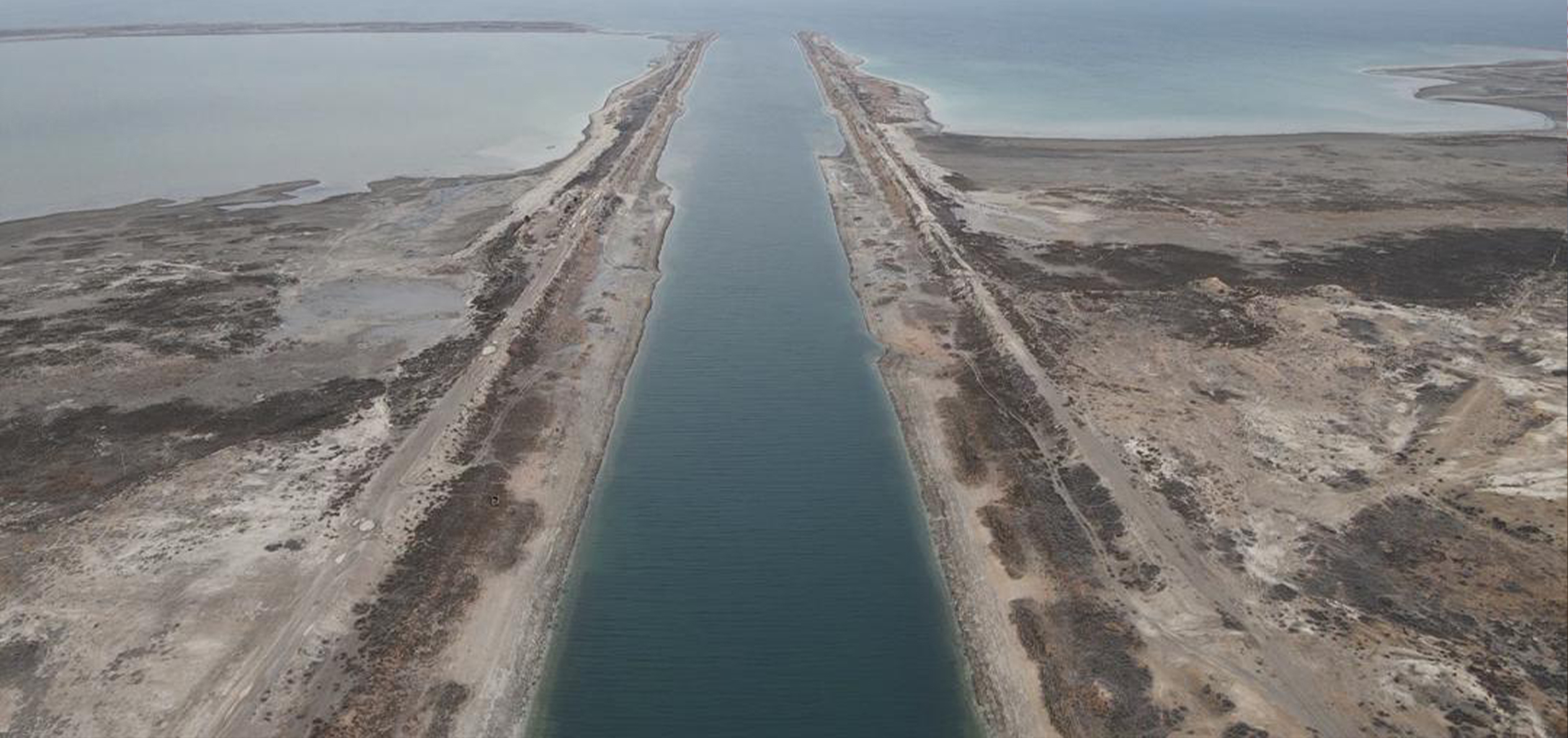
After the recapture of Maskanah and Deir Hafer from the SDF and the PKK-affiliated militias, Aleppo’s Water Resources Directorate reorganized and restarted the main pumping stations, most notably Al-Babiri Station, which is considered the largest pumping station in the Middle East.
The Director of Water Resources in Aleppo, engineer Ahmed Al-Ahmad, conducted a field tour of the Al-Babiri, Al-Mushtaraka, and Al-Yabaniyah stations, under the directives of the Minister of Energy, engineer Mohammed Al-Bashir, and the Director General of the General Authority for Water Resources, engineer Ahmed Al-Kawan, to assess the readiness of the pumping units and ensure operational stability.
Al-Babiri Station, with a pumping capacity of 90 cubic meters per second, supplies irrigation water for 72,000 hectares, in addition to providing drinking water to around 6 million people in Aleppo and its countryside. It also supports the thermal power plant and the industrial city, and helps reduce environmental damage to the Queiq River.
Previously, the SDF forces allegedly imposed the operation or shutdown of pumping through force of arms, which threatened the main canal and caused damage to agricultural lands.
With the restoration of control over the previously mentioned areas, operations have returned to normal, and the directorate confirmed that the situation is stable and under control thanks to the efforts of national staff.